
Wall types & weight · 8 minute read
How to Hang a Heavy Picture
Plasterboard, brick, heritage walls or a picture rail: choose the support for the wall and the artwork, not just the number on a packet of hooks.
The short answer
How do you hang a heavy picture safely?
Weigh the complete framed artwork, identify the wall construction, and choose fixings rated for that substrate and load. Check the frame’s attachment points too. For a picture rail, every component must suit the load: track, anchors, cable and hooks. PPH hooks are rated to 15 kg each; that is not a universal wall rating.
Before you buy a hook or drill a hole
- 1. Weigh the finished piece. Include the frame, glazing and backing. A large canvas and a similarly sized glazed print can need very different support.
- 2. Check the frame hardware. Inspect attachment points, screws and hanging wire for damage or looseness. A strong wall fixing does not repair weak frame hardware.
- 3. Identify the structure, not just the finish. A painted wall might cover plasterboard, masonry or old plaster. Timber and steel studs need different fixing specifications.
- 4. Check restrictions and hidden services. Obtain any required owner, strata or heritage permission. Locate services before drilling; do not drill suspect asbestos-containing material.
There is no universal threshold that makes a picture “heavy”. Whether it is suitable depends on the complete support system, the wall condition and where it will hang.
How to hang a heavy picture on different walls
Start with the actual substrate. Never assume that a weight rating shown for one wall type applies to another.
| Wall type | What to check | Support approach |
|---|---|---|
| Plasterboard / Gyprock | Board thickness and condition, cavity depth and timber or steel framing. | A rated cavity fixing or suitable structural fixing; specify a rail's fixings for the actual wall. |
| Brick and blockwork | Solid or hollow construction, mortar condition and the finish covering it. | A substrate-specific masonry fixing; do not transfer a concrete anchor rating to hollow brick. |
| Concrete | The slab or wall, hidden services and any building restrictions. | An appropriate concrete fixing, with approval and service checks before drilling. |
| Lath-and-plaster / heritage | The condition of the plaster, framing and any original timber rail. | Assess a structural fixing or a specified rail rather than relying on fragile plaster alone. |
| VJ or timber feature walls | Whether the boards are lining or structural, and what framing is available. | Assess framing or suitable overhead structure rather than assuming thin boards can carry the piece. |
Plasterboard: can you hang without a stud?
Some cavity anchors are designed for plasterboard, but they have product-specific requirements for board thickness, cavity space and load. Do not choose one from a generic kilogram claim alone. For valuable or heavy artwork, have the wall and fixing arrangement assessed. Structural framing can provide an alternative, but steel framing is not equivalent to timber.
Brick: is the wall solid or hollow?
Solid brick, perforated brick and hollow blockwork behave differently. Choose from the fixing manufacturer’s specification for the actual material; drilling through a rendered finish does not make that finish the load-bearing substrate.
When a picture rail makes more sense
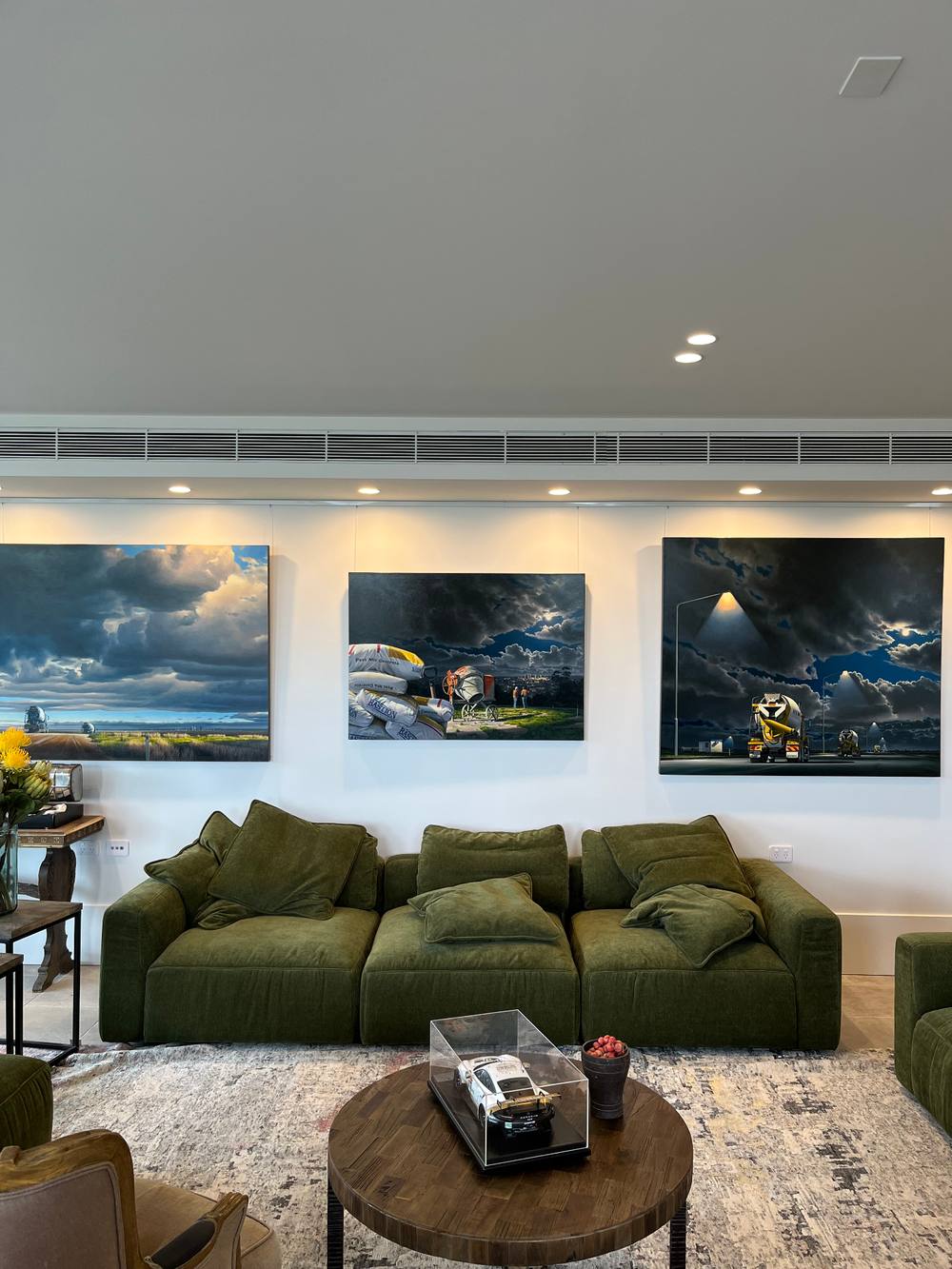
A direct fixing can suit one picture that will stay in place. A rail becomes useful when you have several works, change the arrangement often, or want the fixing line near the ceiling rather than behind each frame. The rail still needs a correctly specified installation; it does not turn an unsuitable wall into a strong one.
Wall-mounted track transfers the load through wall fixings. Ceiling-mounted track uses suitable overhead structure and can avoid fixings in a feature wall. The right option depends on the building, access and permission to drill—not simply on the artwork’s weight.
Compare wall-mounted and ceiling-mounted picture rails
15 kg per hook is not the whole system’s rating
PPH’s adjustable hooks are rated to 15 kg per hook. The safe load of an installation also depends on the rail, its fixing arrangement, the supporting structure, hanging wire or cable, and the frame’s own hardware. Each must be suitable.
Two hooks do not automatically mean 30 kg
A picture may not share its weight equally between hooks. Do not multiply component ratings to calculate a safe load for the complete display. Heavier pieces need an assessed setup, which may involve multiple hanging points or a different system.
An original timber picture rail needs its own assessment. Its age, condition, wall attachment and hanging hardware are not established by the rating of a modern adjustable hook.
Can you hang a heavy picture without nails?
“Without nails” is not the same as “without fixings”. Rail systems need an initial installation, then let you move the art without additional holes. If you rent or live in strata, check permission before installing either a rail or direct fixings.
Adhesive hanging products are limited by their stated load, surface preparation and use conditions. Do not assume an adhesive rated for a particular application is suitable for a heavy glazed frame, valuable artwork or a textured wall. Follow the exact product instructions or choose an assessed mechanical support.
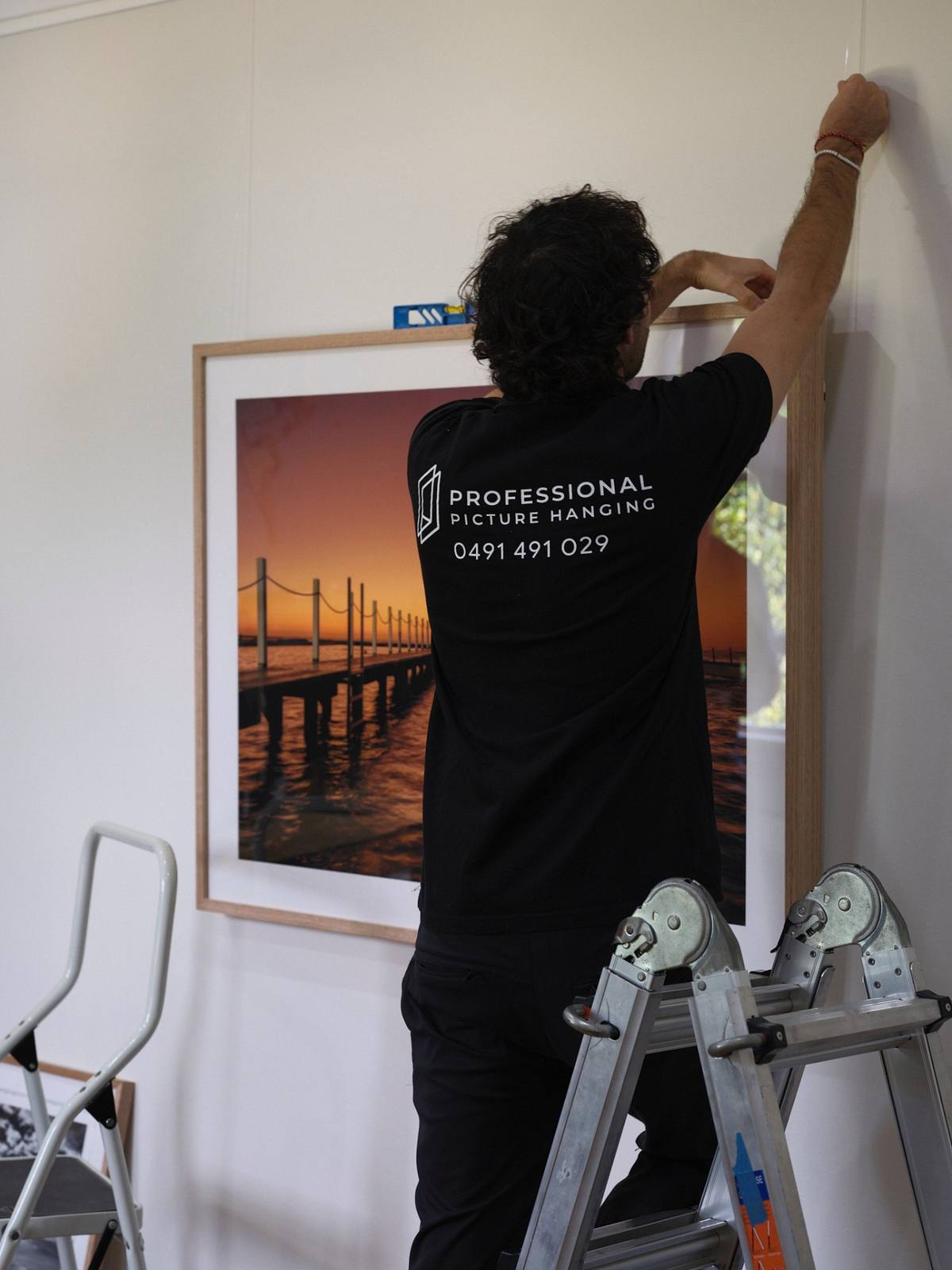
When to use a professional picture hanger
Ask for help if the wall construction is uncertain, the frame is heavy or fragile, the position needs work at height, or the display sits above a bed, seating or a busy walkway. Heritage finishes, unknown timber rails and restricted apartment slabs also deserve assessment before drilling.
“Excellent attention to detail, attentive and good communications. Our job included a difficult high spot to hang and a very heavy (35kgs) mirror. They also suggested an alternative layout of pictures in our hallway and we are so happy with the results. This is our second time using the service and would definitely use again in the future.”
This review describes a heavy-mirror installation; it does not establish that a standard 15 kg hook was used.
What to include in your enquiry
Tell us the framed weight and dimensions, the wall type if known, the intended height and your location. If you are considering rails, include the approximate track length and number of works. We can then discuss the appropriate setup and quote.
PPH supplies and installs picture rails from $80 per metre. Artwork hanging and positioning is $180 + GST per hour. As a guide, 4–5 metres of rail takes about one hour to install; access, wall conditions and positioning the collection affect total time. See the picture rail cost guide.
Explore picture rail installation in your region:
Common questions about heavy picture hanging
- How do you hang a heavy picture on a plasterboard wall?
- Weigh the complete framed picture and identify the wall construction first. Use fixings rated for that particular plasterboard and load, or a suitable fixing into structural framing. A picture rail is another option, provided its track and fixings are specified for the wall and the complete display. There is no single safe weight limit for every plasterboard wall.
- How do you hang a heavy picture on a brick wall?
- Use a masonry fixing specified for the actual substrate and the picture's load. Solid brick, hollow brick, blockwork and concrete are not interchangeable. The render or plaster finish does not identify what is behind it. For several pictures or regular rearranging, a correctly installed rail avoids drilling new holes for every display change.
- Can you hang a heavy picture without nails?
- A professionally installed picture rail lets you reposition artwork without new nails or holes for each picture, but the rail itself still needs suitable fixings. Adhesive products have their own weight, surface and environmental limits; do not assume they are appropriate for heavy, glazed or valuable artwork.
- How much weight can a picture rail hook hold?
- PPH's adjustable hooks are rated to 15 kg per hook. This is a component rating, not a guarantee that any wall, rail or frame will carry that load. The track, fixings, wire or cable and frame hardware must all suit the installation.
- Do two 15 kg hooks automatically hold a 30 kg picture?
- No. Two hooks do not guarantee equal load sharing or a 30 kg safe working load for the whole installation. The complete system and the frame's attachment points need to be assessed. Ask for a specified setup for heavier pieces rather than multiplying hook ratings.
- Can an existing timber picture rail carry heavy artwork?
- Do not assume that it can. Its condition, attachment to the wall and compatible hanging hardware need checking. An original decorative timber rail is not the same as a modern aluminium track with specified components.
Further reading & installation guidance
This is general planning guidance, not a fixing specification for your wall. Follow the selected hardware manufacturer’s current instructions and have uncertain installations assessed.
- Better Homes and Gardens Australia: hanging on plaster and brick walls — background on wall construction and fixing types, not a universal load rating.
- 3M Australia: product-specific plasterboard hanger guidance — an example of a mechanical hanger with its own specified application; it is not a PPH rail component.
- NT Government: asbestos guidance for homeowners — why suspect material needs assessment rather than identification by appearance.
- The complete Australian guide to picture rail systems