
Picture rail systems · 12 minute read
Picture Rail Systems: The Complete Australian Guide
A picture rail system lets you hang, move and rearrange artwork from a discreet track without making a new hole each time. Here is how the system works, what it costs and how to choose the right setup for an Australian home or commercial space.
The short answer
What is a picture rail system?
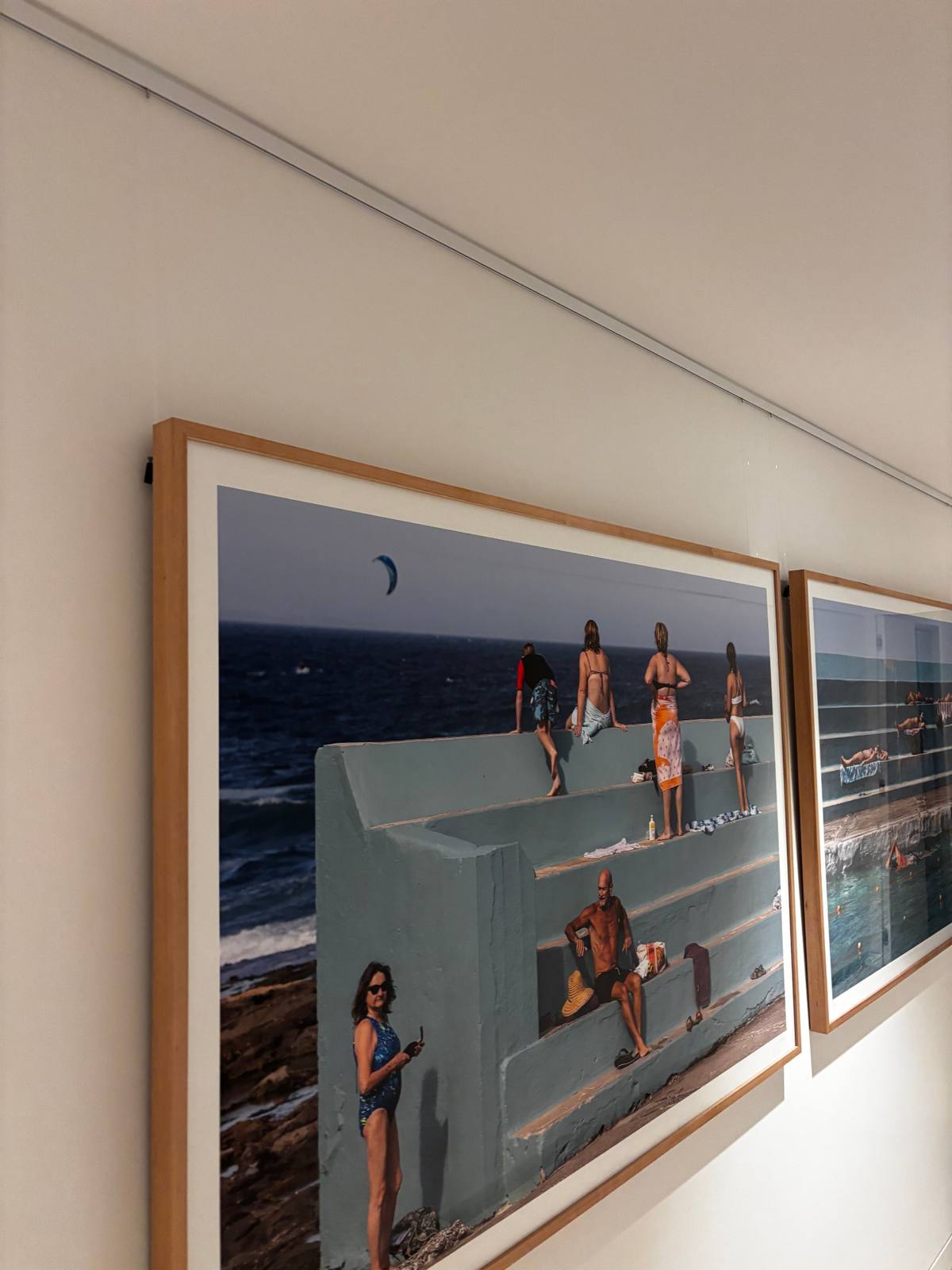
A picture rail system is a slim aluminium track installed near the ceiling or on the ceiling itself. Clear cords or stainless steel wires slide along the track and carry adjustable hooks, allowing artwork to move sideways, up or down without new wall holes.
A flexible alternative to individual wall hooks
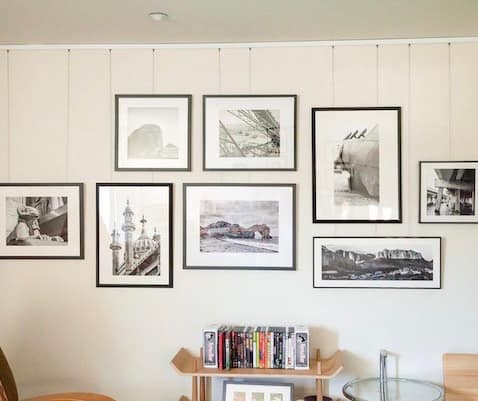
Traditional hanging requires a separate nail, screw or anchor for every frame. If the layout changes, the old fixing remains and another hole is made. A rail system concentrates those structural fixings in one continuous track. Once installed, the hanging points can be adjusted repeatedly without drilling the finished wall again.
That flexibility is useful in homes where collections evolve, rental and strata properties where wall damage matters, and galleries, offices or hotels where displays change regularly. The track can be supplied in white or silver and painted to match the wall or ceiling so it recedes from view.
How does a picture hanging system work?
The system has four working parts: the track, structural fixings, hanging cords or wires, and adjustable hooks. The track carries the load into the wall or ceiling. Each cord moves horizontally along it, while each hook moves vertically on the cord. Together they give every frame two directions of adjustment.
Track
A low-profile aluminium channel fixed in a continuous, level run.
Fixings
Anchors selected for plasterboard, framing, masonry or concrete.
Wires
Near-invisible perlon cords or stainless steel cables that slide along the rail.
Hooks
Adjustable fittings that lock at the required height and carry the frame.
Wall-mounted or ceiling-mounted?
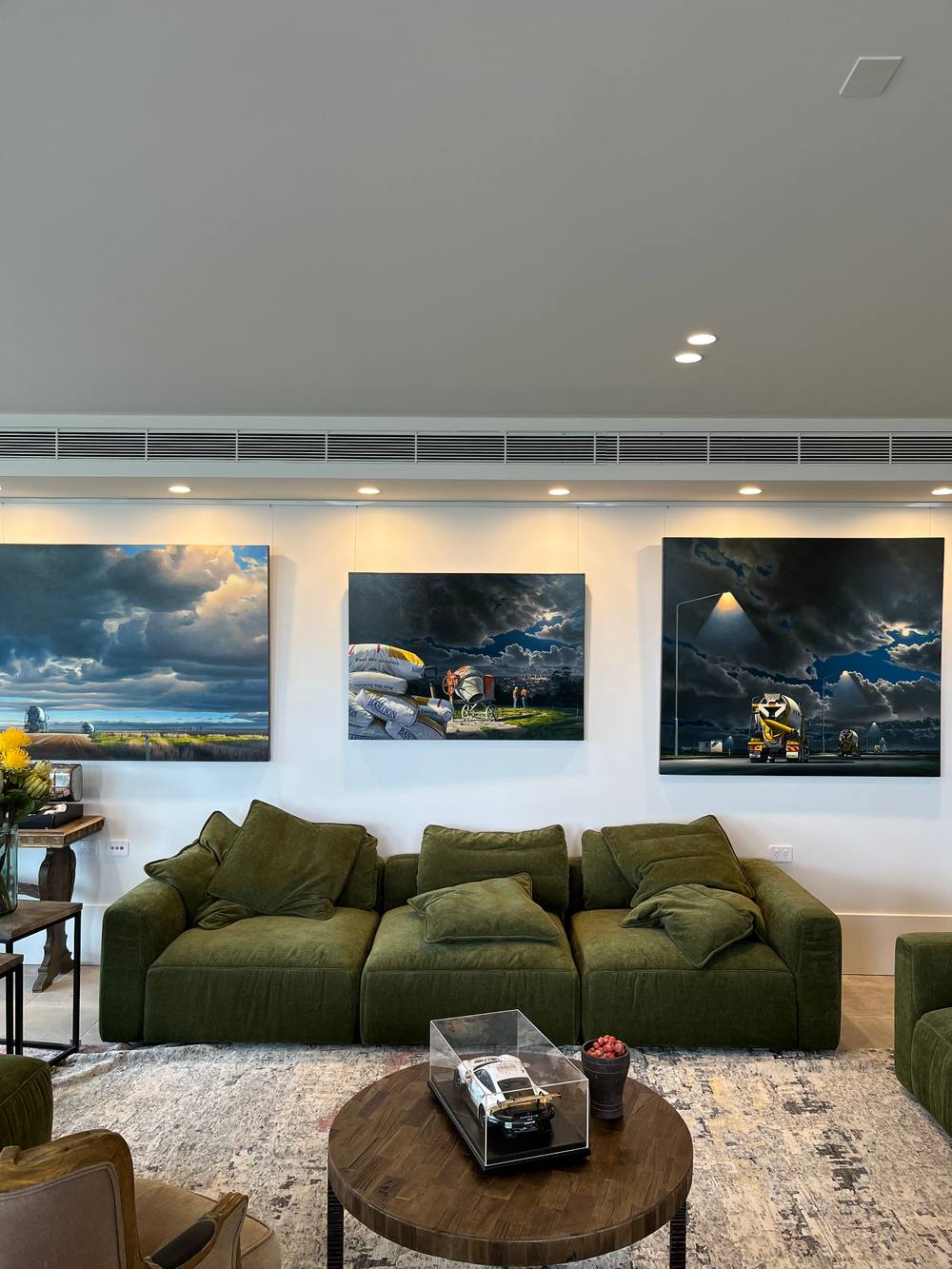
Wall-mounted rail is usually the best choice below a cornice or on an existing timber picture rail. Ceiling-mounted track suits full-height walls, concrete slabs and feature surfaces that should not be drilled. Both use the same principle; the architecture of the room determines which one disappears most successfully.
| Consideration | Wall-mounted | Ceiling-mounted |
|---|---|---|
| Best position | Below cornice or on an existing rail | At the ceiling edge or recessed |
| Suited to | Most homes and heritage interiors | Full-height, feature or gallery walls |
| Structure | Studs, masonry or solid wall | Joists, top plate or concrete slab |
| Visual effect | Slim line at the top of the wall | Track sits above the main sightline |
How much weight can a picture rail hold?
Our standard adjustable hooks carry up to 15 kg per hook. A heavier frame may use two or more hooks and wires to spread the load, but capacity is never decided by the hook alone. The track profile, anchors, wall or ceiling substrate, wire, frame and its rear attachment points all form one load path and must be suitable.
15 kg
Maximum per standard hook
2+ hooks
For larger or heavier pieces
Site checked
Fixings matched to the substrate
Which Australian wall types suit picture rails?
Picture rail can be installed on most common Australian wall and ceiling substrates, provided the fixing method is selected for the structure behind the finish. We regularly work with plasterboard on timber or steel framing, solid brick, double brick, masonry, concrete slabs, heritage lath-and-plaster and VJ timber boards.
- Plasterboard and timber studs
- Steel-stud commercial partitions
- Solid brick and double brick
- Concrete walls and ceiling slabs
- Heritage lath-and-plaster
- VJ boards and timber feature walls
Rammed earth, stone and other precious feature walls can often be left untouched by fixing the rail overhead. The correct answer depends on what is structural, not simply what the visible surface looks like.
What does a picture rail system cost?
Professional Picture Hanging supplies and installs track from $80 per metre. Wires and hooks are added according to the quantity and weight of your artwork. If you would like us to plan and hang the collection, artwork positioning is $180 + gst per hour. We can instead show you how the system works so you can arrange it yourself.
Supply and installation
From $80 / metre
Typical installation pace
4–5 metres / hour
Track length, wall construction, ceiling height, access, corners and artwork quantity affect the final quote. See our complete cost guide for a transparent breakdown.
“The picture rails are fantastic and we are extremely happy. Definitely worth the spend.”
How to choose the right system
Start with the room rather than the hardware. Identify where the track will be least visible, what structure can carry it, the heaviest piece in the collection and how often the display will change. The best system is the one that works safely while respecting the architecture.
- 1
Choose the mounting line
Below the cornice, on an existing rail, at the ceiling edge or recessed into a new ceiling.
- 2
Confirm the substrate
Locate studs, masonry, concrete or another structural fixing point behind the finish.
- 3
List the artwork weights
Use the heaviest and widest pieces to determine hooks, wires and track requirements.
- 4
Plan for future changes
Allow enough track and spare hanging points for new work, seasonal layouts or rotating exhibitions.
Quick answers
Common picture rail questions
- What is a picture rail system?
- A picture rail system is a slim track fixed near the ceiling or directly to the ceiling. Clear cords or stainless steel wires hang from the track and carry adjustable hooks, allowing artwork to be moved without drilling another hole in the wall.
- How much weight can a picture rail system hold?
- Our standard adjustable hooks are rated to carry up to 15 kg per hook. Heavier pieces may be supported by two or more hooks and wires, provided the track, wall substrate and frame fixings are suitable for the combined load.
- How much does a picture rail system cost in Australia?
- Professional Picture Hanging supplies and installs picture rail systems from $80 per metre. Wires and hooks are added according to the number and weight of the pieces. Optional artwork hanging and positioning is $180 + gst per hour.
- How long does picture rail installation take?
- As a practical guide, installing 4 to 5 metres of track takes about one hour. Wall type, access, ceiling height, corners and whether the artwork is also being positioned can change the total project time.
- Can picture rails be installed on brick or concrete?
- Yes. Picture rails can be fixed to plasterboard, timber framing, brick, masonry and concrete with anchors selected for that substrate. Ceiling-mounted systems can also be installed into concrete slabs in apartments and commercial buildings.
Expert review
Written from real installation experience
This guide was reviewed by Professional Picture Hanging, whose trained installers supply and install picture rail systems across nine Australian regions. Our advice reflects the systems, wall types and artwork we work with on site. Last reviewed 22 September 2026.